
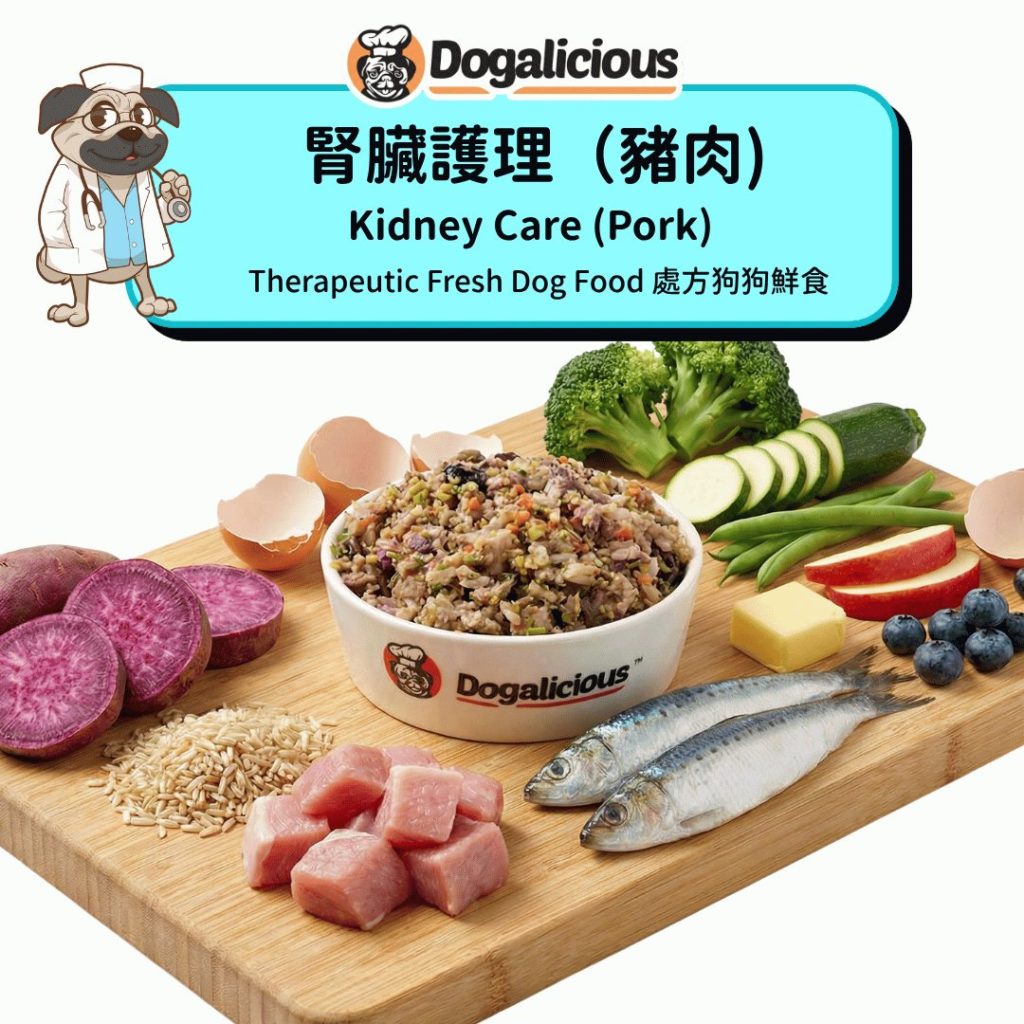
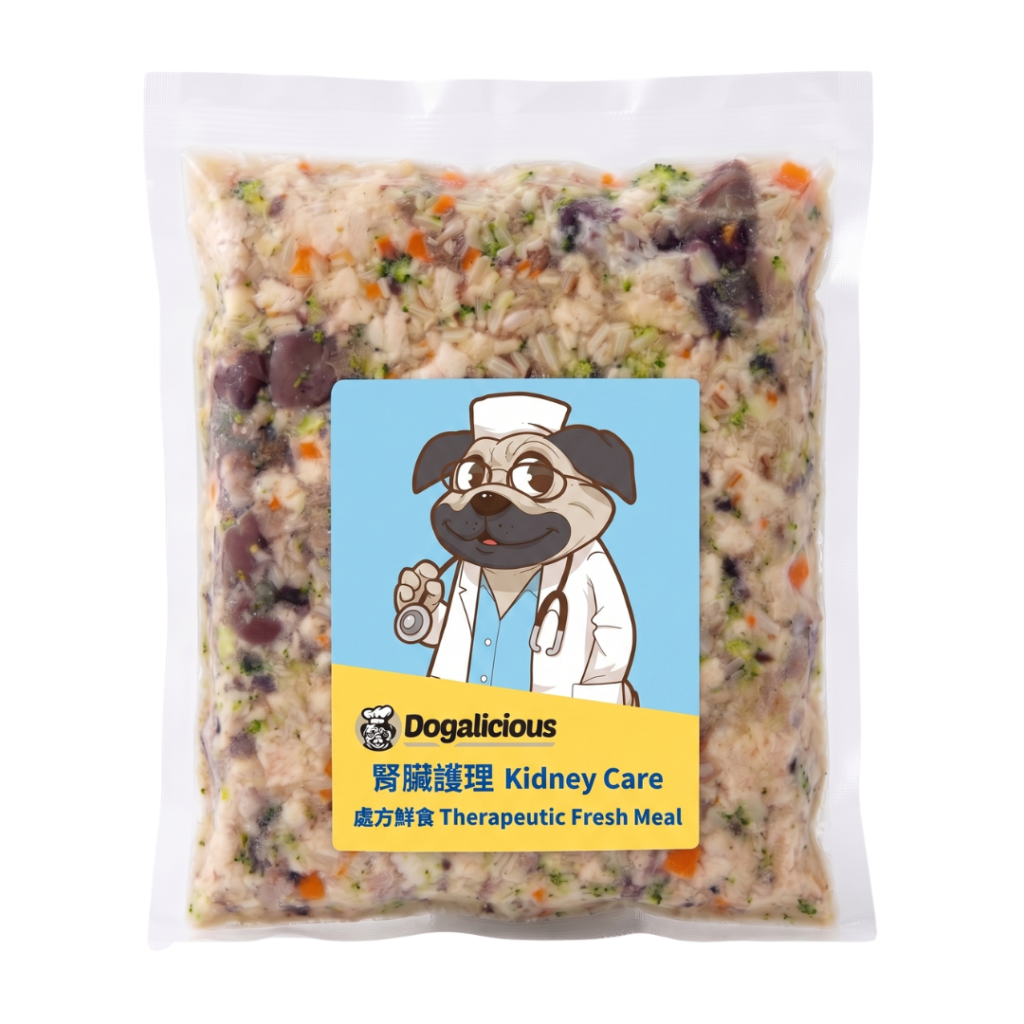
Kidney Care (Pork) Therapeutic Fresh Dog Food
A low-protein, low-phosphorus, low-sodium fresh diet for dogs with chronic kidney disease (CKD) - high-quality protein, kidney-supporting omega-3, and high moisture to help keep your dog hydrated. Best started under veterinary guidance.
- Kidney-friendly protein - Restricted in quantity but high in quality - from pork, sardines and egg - so the kidneys filter less nitrogenous waste.
- Low phosphorus - From natural ingredients only, with no phosphate additives.
- Moderate sodium, maintained potassium - Supports healthy blood pressure while guarding against the low potassium common in CKD.
- Omega-3 EPA & DHA - Anti-inflammatory kidney support from sardines, with a low omega-6:omega-3 ratio (~1.6:1).
- Polyphenol antioxidants - From blueberries and vegetables, especially valuable in kidney disease.
- Digestible energy - White rice and sweet potato meet calories while sparing protein and phosphorus.
- High moisture - Fresh food that helps keep your dog hydrated and eases the kidneys' work.
Earn up to 152 DogaPoints on this order
Cart discount: 10% off under $100 · 14% off $100-399 · 18% off $400-599 · 20% off $600-1,199 · 22% off $1,200-2,399 · 25% off $2,400+. Applied automatically at checkout - subscribers save even more with Auto-Ship.
Full ingredient list
Made with natural ingredients, so appearance and texture may vary slightly from batch to batch. The recipe and nutrition stay the same.
Nutrient profile · per 100g
About this diet
Chronic kidney disease is one of the most common conditions in older dogs. It cannot be cured, but diet is one of the few things shown to meaningfully slow its progression - and it is the part you control at every meal.
Kidney Care works by taking pressure off the kidneys. Phosphorus is restricted, because excess dietary phosphorus accelerates kidney damage and drives secondary hyperparathyroidism; in this recipe every bit of phosphorus comes from the ingredients themselves, with no phosphate additives. Protein is moderated in quantity but kept high in quality - from pork, sardines and egg - so your dog still receives every essential amino acid while the kidneys have less nitrogenous waste to filter. Sodium is kept moderate to support healthy blood pressure, and potassium is maintained at an adequate level to guard against the low potassium (hypokalaemia) that CKD dogs are prone to.
The fats do more than one job. Omega-3 EPA and DHA from sardines add anti-inflammatory support for the kidneys, and the overall blend keeps the omega-6:omega-3 ratio low (around 1.6:1) to reinforce that effect. Digestible energy comes largely from white rice and sweet potato, so calories are met without leaning on more protein- and phosphorus-rich ingredients, while blueberries contribute polyphenol antioxidants - particularly valuable in kidney disease.
Lean pork, egg and a little butter keep the recipe genuinely appetising, which matters because CKD dogs often lose interest in food at exactly the point they most need to eat. Being fresh food it is also high in moisture, so better hydration means the kidneys work less hard to concentrate urine. Always start a therapeutic diet under your vet's guidance, matched to your dog's IRIS stage.
FAQ
Yes - it's a low-protein, low-phosphorus, low-sodium therapeutic diet formulated specifically for dogs with CKD. Always start a therapeutic diet under your vet's guidance.
No - CKD can’t be cured, but restricting phosphorus, sodium and protein quantity (while keeping protein quality high) can significantly slow its progression.
All phosphorus comes from natural ingredients - there are no phosphorus additives, and levels are kept low to reduce the workload on the kidneys.
That's deliberate. Dogs with chronic kidney disease need carefully controlled protein and phosphorus - too much of either adds to the kidneys' workload and lets waste products build up in the blood. This recipe uses a smaller amount of high-quality protein, so your dog still gets the essential amino acids they need with less waste for the kidneys to filter. The remaining energy comes from gentle carbohydrates instead. Feed under your vet's guidance.
Fresh food is high in moisture compared with dry kibble, which helps keep your dog hydrated so the kidneys work less to concentrate urine.
The diet supports kidney health as part of your vet's management plan. Keep giving any prescribed medication and review progress with your vet.
Introduce it gradually over 7–10 days, mixing increasing amounts with the current food, to avoid digestive upset.
That is on purpose. This recipe keeps phosphorus very low to protect the kidneys, and because Ca:P is simply calcium divided by phosphorus, a low phosphorus level naturally makes the ratio high - often above 3:1. Calcium stays normal; it is the low phosphorus doing exactly what a renal diet should. Always feed under your vet's guidance.
Our food is made with natural, whole ingredients, so appearance and texture vary slightly between batches - meat, vegetables and fruit change with the season and the harvest. Every batch is made to the same recipe and nutritional standard and passes the same quality checks, so the nutrition your dog receives stays the same.
Full nutritional analysis
AMINOACIDS
| Arginine (g) | 0.33 |
| Phenylalanine (g) | 0.23 |
| Phenylalanine + Tyrosine (g) | 0.4 |
| Isoleucine (g) | 0.24 |
| Histidine (g) | 0.18 |
| Leucine (g) | 0.41 |
| Lysine (g) | 0.39 |
| Methionine (g) | 0.13 |
| Methionine + Cystine (g) | 0.2 |
| Taurine (g) | 0.01 |
| Threonine (g) | 0.23 |
| Tryptophan (g) | 0.06 |
| Valine (g) | 0.28 |
FATTY ACIDS
| Tot Saturated Fas (g) | 2.15 |
| Tot Monounsaturated Fas (g) | 1.86 |
| Tot Polyunsaturated Fas (g) | 1.59 |
| ALA (g) | 0.06 |
| EPA (g) | 0.2 |
| DHA (g) | 0.22 |
| EPA + DHA (g) | 0.42 |
| Tot Omega-3 (g) | 0.58 |
| Arachidonic acid (g) | 0.05 |
| Linoleic acid (g) | 0.93 |
| Tot Omega-6 (g) | 0.99 |
| Omega-6 : Omega-3 | 1.71 |
MINERALS
| Calcium (g) | 0.23 |
| Phosphorus (g) | 0.1 |
| Ca/P ratio | 2.21 |
| Potassium (g) | 0.2 |
| Sodium (g) | 0.03 |
| Magnesium (g) | 0.05 |
| Copper (mg) | 0.37 |
| Iodine (mg) | 0.1 |
| Iron (mg) | 4.55 |
| Manganese (mg) | 0.81 |
| Selenium (mcg) | 11.9 |
| Zinc (mg) | 4.63 |
VITAMINS
| Vitamin A (IU) | 5428 |
| Vitamin D (IU) | 37.6 |
| Vitamin E (IU) | 6.5 |
| Vitamin B1 (thiamine) (mg) | 0.28 |
| Vitamin B2 (riboflavin) (mg) | 0.5 |
| Vitamin B3 (niacin) (mg) | 1.8 |
| Vitamin B5 (pantothenic acid) (mg) | 1.51 |
| Vitamin B6 (pyridoxine) (mg) | 0.29 |
| Vitamin B9 (folic acid) (mcg) | 17.1 |
| Vitamin B12 (cyanocobalamin) (mcg) | 3.14 |
| Vitamin J (cholin) (mg) | 130 |
Reviews
There are no reviews yet.