
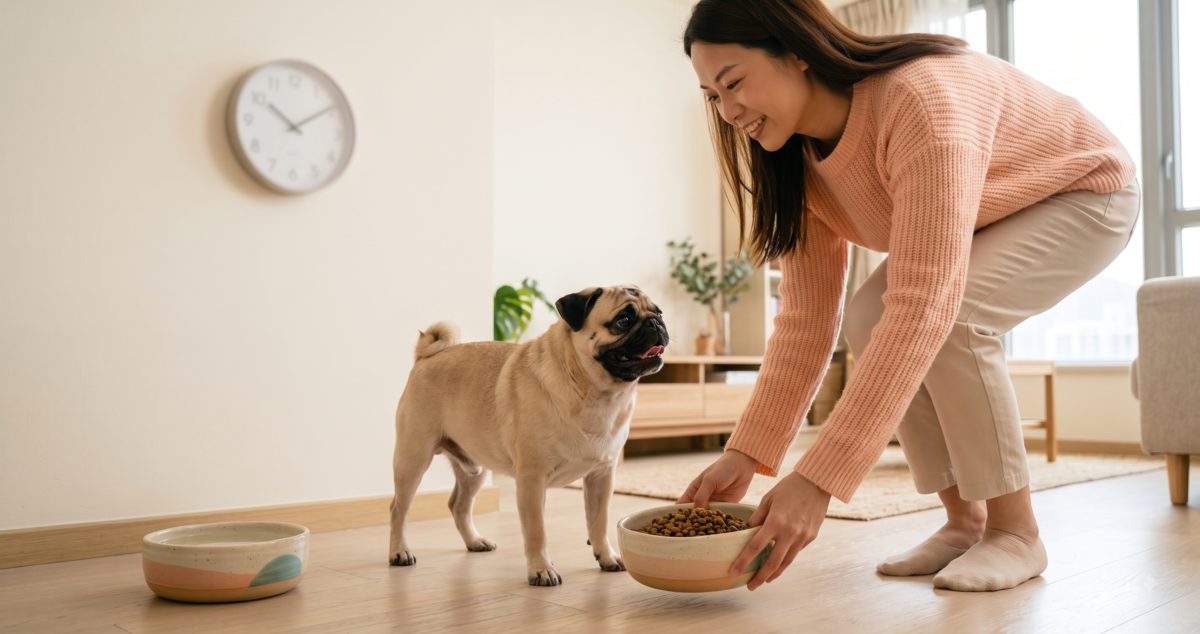
Diabetic dog daily care is a routine, not a rescue mission: feed the same food in the same amounts at the same times, give insulin exactly as your vet directs, and watch closely for the warning signs of low blood sugar. Get those habits right and most dogs with diabetes go on to live full, comfortable lives.
What diabetic dog daily care looks like day to day
A diabetic dog’s body can no longer regulate its own blood sugar, so your job as the owner is to make every day resemble the one before. Predictability is the whole game. When meals, insulin, exercise and even treats stay consistent, blood glucose swings become smaller and easier to control — and the dangerous lows become far less likely.
Diabetes in dogs is almost always insulin-dependent, which means diet and routine support treatment but never replace it. Everything below is about building a stable daily rhythm; the medical decisions — which insulin, how much, when to change it — belong to your veterinarian.
Sync every meal to insulin timing
Most diabetic dogs are fed two measured meals a day, roughly 12 hours apart, with insulin given around each meal so that the rise in blood sugar from food overlaps with the insulin’s action. Your vet sets the exact schedule; your job is to follow it to the clock.
Feeding order matters. As a general rule, make sure your dog actually eats before insulin is given. If your dog refuses a meal, is vomiting, or only picks at the food, do not simply give the usual dose — the insulin may be too much for the little food eaten, which can trigger a dangerous low. Call your vet for instructions instead. Never adjust an insulin dose on your own.
It helps to build a fixed sequence you repeat every time: prepare the measured meal, watch your dog finish it, then give insulin, then note it in your log. Store insulin correctly (refrigerated, gently rolled rather than shaken), rotate injection sites slightly to protect the skin, and keep a spare unopened vial or pen so you never miss a dose because you ran out. Small logistical habits like these are what make the whole routine sustainable month after month.
Keep food, amounts and timing consistent
In a classic Kimmel SE et al., JAVMA 2000 study of dogs with diabetes, feeding a consistent diet with added fibre improved glycaemic control. The practical takeaway for owners is powerful: the exact recipe often matters less than feeding the same thing, measured the same way, at the same times, every single day. Consistency is the cheapest blood-sugar tool you have.
A simple daily-consistency checklist:
- Feed the same diet every day — sudden switches change how fast sugar is absorbed.
- Measure every meal with a gram scale or a levelled measuring cup, not by eye.
- Serve meals at the same two times each day, anchored to insulin.
- Skip surprise treats and table scraps; if you use treats, keep them tiny, consistent and vet-approved.
- If you must change diet, transition gradually over 7–10 days and tell your vet first, so monitoring can be tightened during the switch.
Recognise hypoglycaemia — the one true emergency
Of everything in diabetic dog daily care, this is the section to memorise. Hypoglycaemia (blood sugar dropping too low) can develop quickly and is immediately life-threatening. The signs escalate in a recognisable order:
- Early: unusual hunger, restlessness, quietness, mild weakness.
- Worsening: wobbliness or a “drunk” walk, trembling, disorientation, glazed eyes.
- Emergency: collapse, seizures, or unconsciousness.
Keep a fast sugar source within reach at all times — honey, corn syrup, or a glucose gel. If your dog is awake and able to swallow, rub about a tablespoon of honey or syrup onto the gums, then offer a normal meal once they steady, and call your vet right away. If your dog is unconscious or seizing, do not put food or fingers in the mouth; rub a little syrup on the gums and get to an emergency vet immediately. Every low, even one your dog seems to shake off, should be reported to your vet.
Home monitoring and glucose curves
Monitoring tells you whether the routine is working. Many owners now check blood sugar at home with a pet glucometer or a continuous glucose monitor applied by the vet, and this often gives truer readings than the clinic, because the stress of a vet visit can push a dog’s blood sugar up.
A “glucose curve” is simply a series of readings taken across a day to show how high and how low blood sugar swings between insulin doses — it is the picture your vet uses to fine-tune treatment. Whether or not you test at home, keep a simple daily log:
- Did your dog eat the full meal?
- Time and any home glucose readings.
- Water intake, energy and mood.
- Any wobbliness, accidents, or refused meals.
One golden rule: never change the insulin dose based on a single reading or on your own judgement. Bring the log to your vet and let them interpret the trend.
Watch water intake and urination
Thirst and urination are your at-home dashboard for control. A diabetic dog whose blood sugar is running high spills excess sugar into the urine, pulling water with it — so a sudden increase in drinking and peeing usually means control is slipping. Try to have a rough sense of how much your dog drinks in a normal day so you can notice a change. Report any of these to your vet:
- Drinking noticeably more, or larger and more frequent puddles.
- New accidents in a previously house-trained dog.
- Appetite or weight changing despite steady feeding.
- Cloudiness in the eyes — cataracts are common in diabetic dogs and can appear fast.
Keep exercise consistent
Exercise lowers blood sugar, so like food it should be predictable — similar length, similar intensity, ideally at the same time each day. A steady daily walk is ideal. What causes trouble is the occasional huge, strenuous outing on top of the usual insulin, which can tip a dog into a low. If a big activity day is coming, ask your vet how to plan meals and monitoring around it rather than improvising.
Hong Kong’s climate adds one more wrinkle: on hot, humid days dogs tire faster and may eat or move differently, so keep walks to cooler mornings and evenings and carry water and your sugar source. If your dog’s energy or appetite shifts with the weather, note it in the log — patterns that seem random often line up with routine changes once they are written down.
Routine rechecks and coordinating every change with your vet
Even a rock-steady diabetic dog needs periodic rechecks. Your vet may run a glucose curve or a fructosamine test (which reflects average blood sugar over the previous couple of weeks) to confirm control and catch drift before it becomes a crisis. Booking these before problems appear is part of good Merck Veterinary Manual — Diabetes Mellitus in Dogs and Cats management.
The golden rule of diabetic dog daily care ties everything together: change one thing at a time, and only with your vet. Diet, dose, exercise and body weight all influence blood sugar, so if you alter two at once you will never know which one moved the needle. When something needs to change, coordinate it so monitoring can be tightened around the change.
How Dogalicious fits into diabetic dog daily care
Because consistency is the foundation of diabetic dog daily care, a reliable, pre-portioned, same-every-day diet takes a real variable off your plate. If your vet agrees a therapeutic diet is appropriate for your dog, here is what we formulate to support diabetes management — always fed under veterinary guidance, never as a substitute for insulin:
- Diabetes Care — Chicken
- Diabetes Care — Fish
- Browse the full Diabetes therapeutic range.
For the nutrition side of the story — fibre, carbohydrate consistency and how the recipe is built — see our companion guide on managing a diabetic dog’s diet, and our general fresh dog food guide.
FAQ
Can diet alone control my dog’s diabetes?
No. Dogs with diabetes need insulin, and diet and routine support that treatment rather than replacing it. A consistent diet makes blood sugar easier to control, but always alongside the plan your Purina Institute — Diabetes Mellitus in Dogs guidance and your own vet set.
My dog won’t eat but the insulin is due — what do I do?
Do not give the usual dose to a dog that hasn’t eaten. Too much insulin for too little food can cause a dangerous low. Call your vet for instructions; keep honey or syrup on hand in case of hypoglycaemia in the meantime.
How do I know if my dog’s diabetes is well controlled?
Good signs are stable weight, normal thirst and urination, steady appetite and good energy — with no episodes of weakness or wobbliness. Your vet confirms control with rechecks such as a glucose curve or fructosamine test.
References / Further reading
- Kimmel SE et al., JAVMA 2000 — fibre and glycaemic control in diabetic dogs.
- Purina Institute — Diabetes Mellitus in Dogs.
- Merck Veterinary Manual — Diabetes Mellitus in Dogs and Cats.