
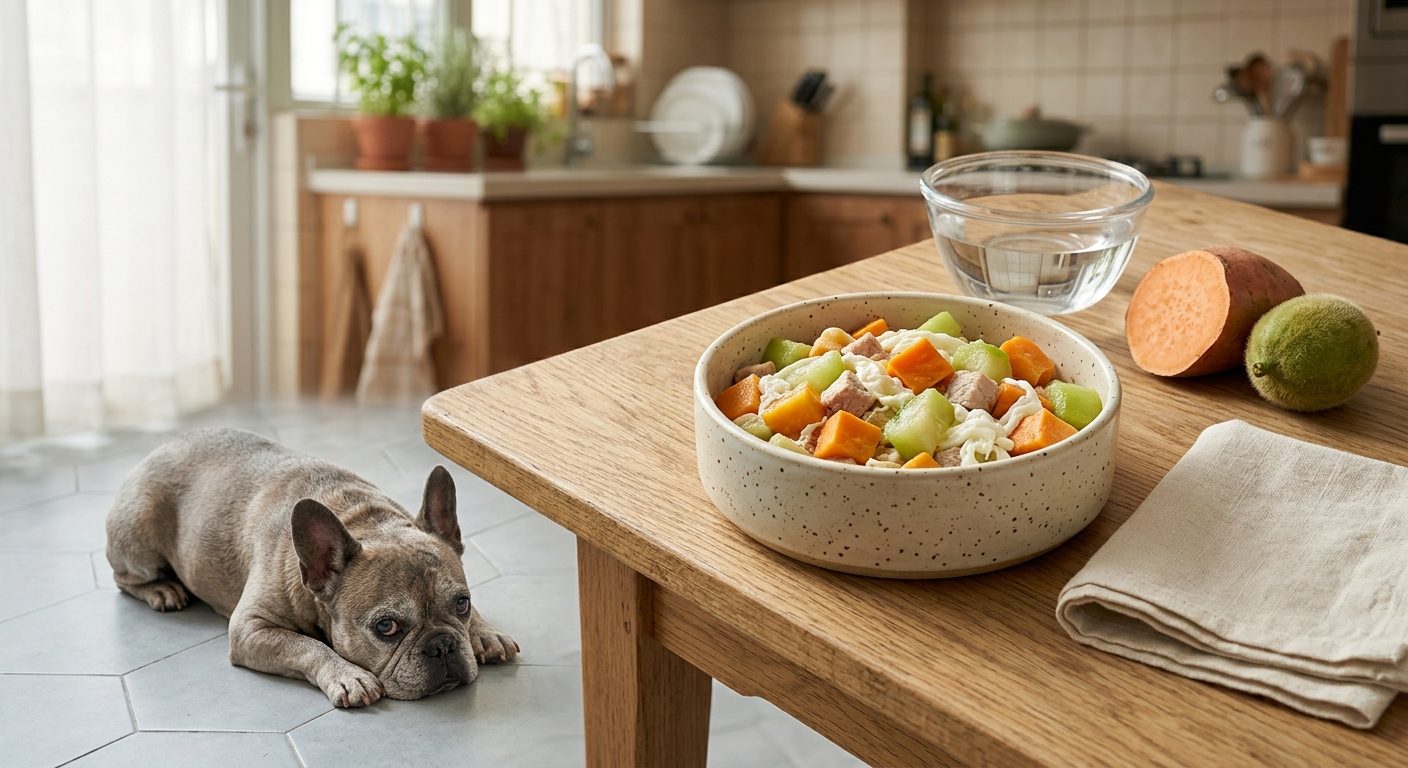

At 49 g of fat per 1000 kcal this is the most energy-dense late-stage recipe in the book. When a dog will only manage a few mouthfuls at a time, what those mouthfuls carry starts to matter a great deal.
This recipe is formulated for dogs in IRIS stage 3 to 4. Phosphorus is held at 501 mg per 1000 kcal, against roughly 1,200 to 1,800 mg in an ordinary adult food – phosphorus restriction is the single most evidence-backed way to slow progression. Protein sits at 46 g, moderated and weighted toward high biological value sources, reducing nitrogenous waste while protecting muscle. Potassium is lifted to 2,022 mg because dogs with CKD lose it through urine, and the calcium to phosphorus ratio is held at 1.60:1.
This recipe deliberately does not meet the AAFCO adult maintenance profile. A therapeutic renal diet has to push phosphorus and protein below those levels; that is the design, not a defect. It follows that these recipes are only for dogs already diagnosed with kidney disease and monitored by a vet, and are not suitable as a long-term diet for a healthy dog.
Ingredients (standard batch)
| Ingredient | Amount | Preparation |
|---|---|---|
| Lean pork shoulder | 450 g | diced, visible fat trimmed |
| Sweet potato | 1.4 kg | peeled and diced |
| Chinese squash | 300 g | peeled and diced |
| Egg white | 200 g (about 6 egg whites) | whites only – yolks are high in phosphorus |
| Olive oil | 80 g (about 5.9 tbsp) | stirred in off the heat |
This batch yields about 2.2 kg (about 2,610 kcal).
Method
- Put the sweet potato in a large pot, cover with water, bring to a boil and simmer for 12 minutes.
- Add the lean pork shoulder and cook for 10 to 12 minutes until fully cooked through.
- Add the chinese squash and cook a further 5 minutes until tender.
- Beat the egg whites, take the pot off the heat and pour them in slowly while stirring, so they set into soft strands in the residual heat.
- Stir in the olive oil until evenly combined.
- Cool with the cooking liquid included – it carries potassium, so do not drain it – then portion: 3 days in the fridge, the rest frozen.
Nutrient analysis (per 1000 kcal, before supplements)
| Item | Per 1000 kcal | Renal target |
|---|---|---|
| Phosphorus | 501 mg | target 500 to 800 |
| Crude protein | 46 g | target 35 to 60 |
| Fat | 49 g | – |
| Calcium | 800 mg | Ca:P 1.60:1 |
| Potassium | 2,022 mg | target above 2000 |
| Sodium | 373 mg | target 200 to 450 |
This recipe needs both supplements: Eggshell Calcium Powder at about 1.6 g per 1000 kcal, and Daily Multi for Dogs at about 11.0 g per 1000 kcal. In a renal diet the eggshell powder does two jobs: it supplies calcium, and eaten with the meal its calcium carbonate binds phosphorus in the gut so less is absorbed. That is precisely how prescription phosphate binders work, which is why it must go into the food rather than beside it. The Daily Multi restores the vitamins and trace minerals a low-phosphorus diet runs short of, with B vitamin needs set higher here because CKD dogs lose water-soluble vitamins through increased urination.
Feeding and supplement dosing (two meals per day)
| Dog weight | Daily energy need | Daily food | Batch lasts | Daily Multi (per meal) | Eggshell Calcium (per meal) |
|---|---|---|---|---|---|
| 3 kg | 251 kcal | about 210 g | about 10 days | 1.4 g | 0.2 g (about 1/8 tsp) |
| 5 kg | 368 kcal | about 310 g | about 7 days | 2.0 g | 0.3 g (about 1/8 tsp) |
| 10 kg | 619 kcal | about 520 g | about 4 days | 3.4 g | 0.5 g (about 1/4 tsp) |
| 20 kg | 1,040 kcal | about 880 g | about 3 days | 5.7 g | 0.8 g (about 3/8 tsp) |
| 30 kg | 1,410 kcal | about 1,190 g | about 2 days | 7.8 g | 1.1 g (about 1/2 tsp) |
Important notes
- These recipes are for dogs with kidney disease and must be used under veterinary supervision. Confirm the IRIS stage with blood and urine testing before you start, and recheck regularly.
- Phosphorus control is the most evidence-backed way to slow progression. Eggshell calcium powder binds phosphorus in the gut when it is eaten with the meal, so always stir it into the food rather than feeding it separately.
- Dogs with CKD dehydrate easily. Keep fresh water available at all times, and add warm water to the bowl to increase intake.
- Never add bone, organ meat, cheese or dairy. All are high in phosphorus and would undo the whole point of the recipe.
- If you see appetite loss, vomiting, unusual breath odour or weight loss, contact your vet rather than adjusting portions yourself.
- Recheck blood phosphorus, creatinine, SDMA and potassium every 3 to 6 months and adjust the recipe or stage accordingly.
No time to cook every week? Dogalicious Kidney Care therapeutic fresh food is nutritionist formulated, low in phosphorus and ready to heat and serve. The supplements this recipe needs: Daily Multi for Dogs and Eggshell Calcium Powder.