
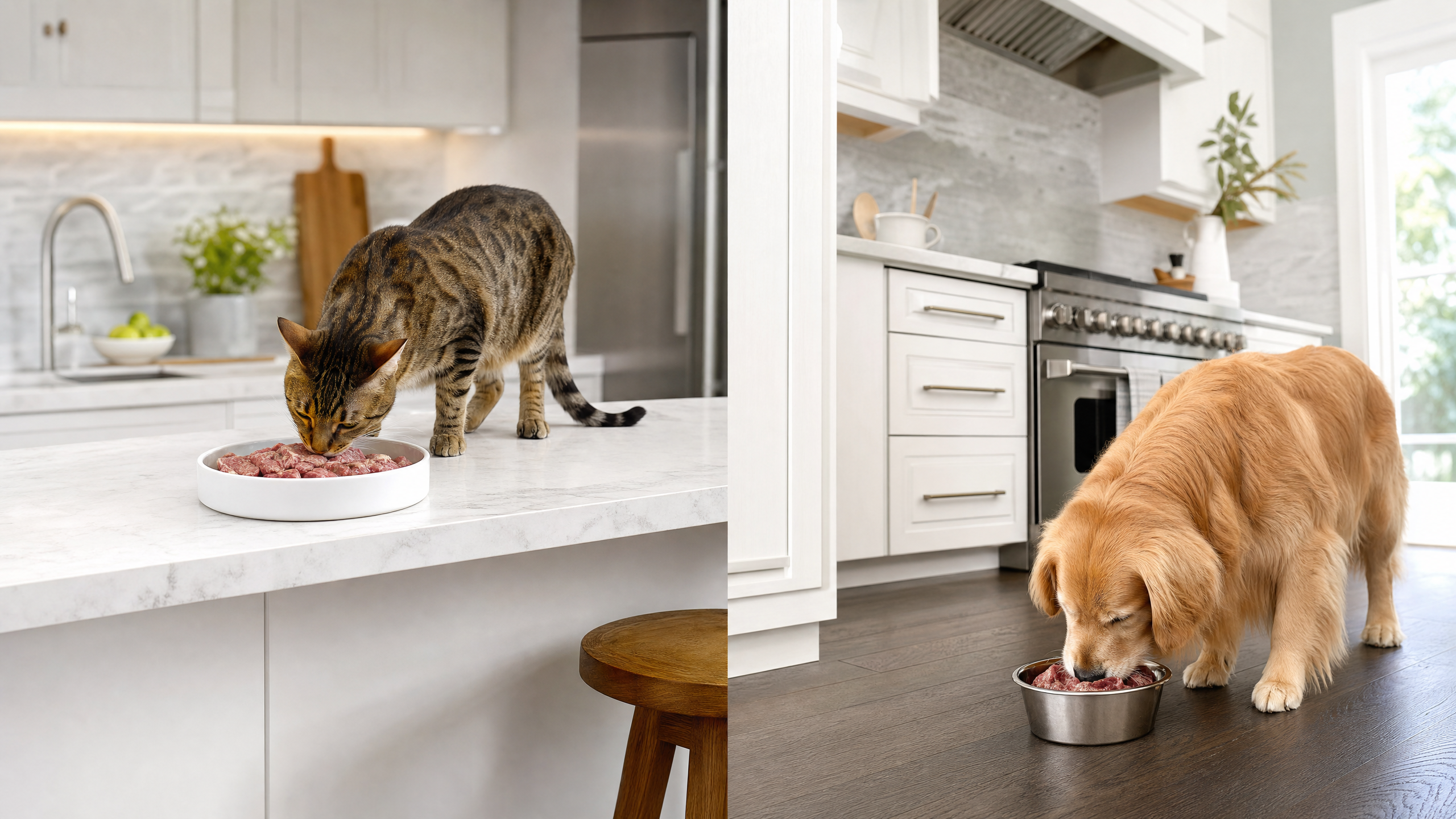

Multi-Pet Household Feeding Dog Cat Hong Kong: Nutrition Tips
- The Rise of Multi-Pet Households in Hong Kong
- Why Cats Are Not Small Dogs: Critical Nutritional Differences
- The Risks of Cross-Feeding: Cat Eating Dog Food and Vice Versa
- Managing Mealtime in Small Hong Kong Apartments
- Species-Specific Support: Taurine, Protein, and Fat Requirements
- Using Supplements to Bridge the Nutritional Gap
- Transitioning Both Pets to a Fresh Food Routine
1. The Rise of Multi-Pet Households in Hong Kong
In the vibrant city of Hong Kong, more families are choosing to share their homes with both dogs and cats. Managing a multi-pet household feeding dog cat Hong Kong presents unique challenges, especially when living in typical urban apartments where space is at a premium. While having both species brings double the joy, it also requires a double-layered approach to nutrition.
One of the most common issues in these households is “cross-bowl” eating. Whether it’s a curious cat nibbling on dog kibble or a food-motivated dog finishing the cat’s leftovers, understanding why this matters is the first step toward a healthier home.
2. Why Cats Are Not Small Dogs: Critical Nutritional Differences
It is a common misconception that cats and dogs can share the same food. However, cats are “obligate carnivores,” meaning their bodies are biologically designed to derive nutrients primarily from animal tissue. Dogs, on the other hand, are “facultative carnivores” (or omnivores) who can process a wider variety of plant-based ingredients.
Dogalicious Fresh Cat Food is formulated with this in mind, featuring 80% minced meat and 5% liver to meet the high protein demands of felines. Our cat recipes also include higher fat levels (up to 8% in the Fish recipe) and specific nutrients like arachidonic acid and pre-formed Vitamin A, which cats cannot synthesize themselves but dogs can.
3. The Risks of Cross-Feeding: Cat Eating Dog Food and Vice Versa
The risk of a cat eating dog food is primarily nutritional deficiency. Dog food lacks the concentrated levels of Taurine and Vitamin A that cats need to survive. Over time, a cat eating primarily dog food can develop heart disease (DCM) and vision loss.
Conversely, if a dog consistently eats cat food, the high protein and fat content can lead to weight gain or even pancreatitis. Cat food is also much higher in calories; for example, Dogalicious cat recipes provide 133 kcal per 100g, while our dog recipes range from 140 to 177 kcal but are served in much larger portions. Preventing these cross-feeding habits is essential for long-term health.
4. Managing Mealtime in Small Hong Kong Apartments
A separate feeding dog cat apartment strategy is vital in small spaces. If your dog is highly food-motivated, they may try to intimidate the cat away from their bowl. To prevent this, try feeding your cat on a raised surface, such as a kitchen counter or a sturdy cat tree, where the dog cannot reach.
Establishing a strict meal time routine multi-pet HK also helps. Instead of free-feeding (leaving food out all day), set specific times for breakfast and dinner. This allows you to monitor exactly how much each pet eats and ensures that fresh food, like Dogalicious, is consumed within the safe 2-hour window before it needs to be refrigerated.
5. Species-Specific Support: Taurine, Protein, and Fat Requirements
Taurine is the most critical difference. While dogs can synthesize some taurine, cats must get it directly from their diet. Dogalicious Daily Multi for Cats contains a massive 10g of Taurine per 2g serving to ensure feline heart health.
Protein levels also differ significantly. Our cat recipes provide approximately 18% protein (Chicken and Beef), whereas our dog recipes, like Garden Chicken, provide around 11.5%. This higher protein density in cat food is necessary to maintain feline muscle mass and metabolic function. By choosing species-specific Dogalicious recipes, you are honoring the unique biological needs of each pet.
6. Using Supplements to Bridge the Nutritional Gap
In a multi-pet home, supplements can act as a safety net. If you suspect your pets are occasionally sneaking bites of each other’s food, adding the correct supplement to their primary meal is a smart move. Dogalicious Daily Multi for Dogs provides 20 essential nutrients, including Magnesium and Zinc for a shiny coat.
For the feline side, the Daily Multi for Cats offers 22 nutrients, including Vitamin B-complex for metabolism and Choline for brain health. Both supplements are easy to use—simply mix half a scoop into their fresh food twice daily. This ensures that even if mealtime gets a little chaotic, their core nutritional requirements are always met.
7. Transitioning Both Pets to a Fresh Food Routine
Switching both pets to fresh food can simplify your life, but it must be done carefully. Follow our transition guide: dogs usually take 7–10 days, while cats may need 10–14 days to accept a new texture. Start by mixing a small amount of Dogalicious into their current food and gradually increase the ratio.
New multi-pet households can take advantage of our Free Trial offers. Use code HAPPYPET26 to get a $99 rebate on your second purchase. We offer a 5 × 50g Dog Variety Pack and a 3 × 85g Cat Variety Pack, allowing you to find the perfect flavors for both your canine and feline companions. With free delivery across Hong Kong for orders over $500, keeping your multi-pet family healthy has never been easier.
Dogalicious Fresh Cat Food | Dogalicious Daily Multi for Cats | Dogalicious Fresh Dog Food | Free Trial Options