
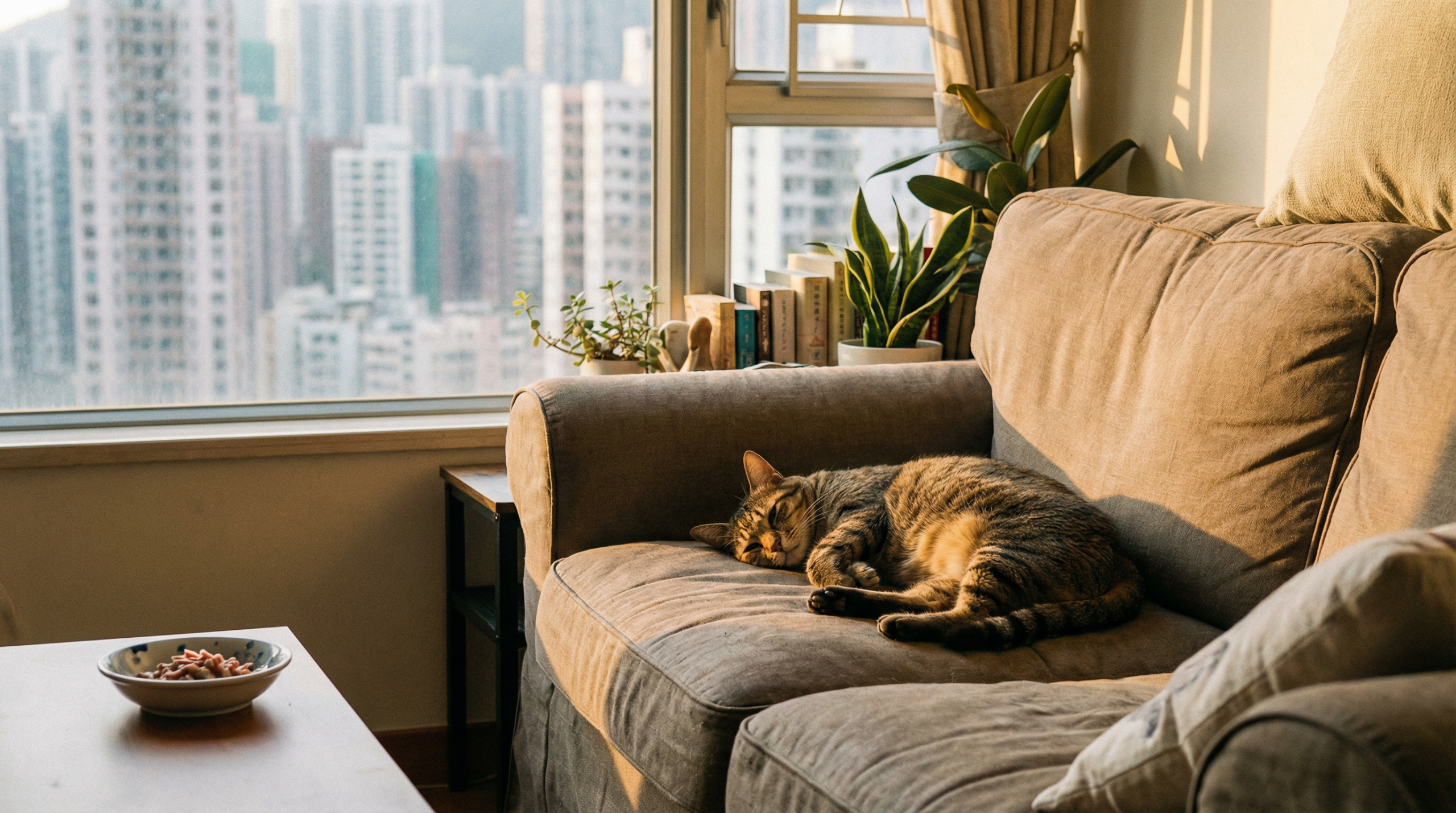

5 Signs Your Cat Is Stressed in a Small Hong Kong Apartment (And How Diet Helps)
Table of Contents
- Why Hong Kong Apartments Are Stressful for Cats
- Sign 1: Excessive Grooming or Hair Loss
- Sign 2: Hiding and Withdrawal
- Sign 3: Changes in Appetite or Eating Habits
- Sign 4: Litter Box Avoidance
- Sign 5: Vocalisation and Restlessness at Night
- How Fresh Cat Food Supports Stress Relief Through Nutrition
- Practical Steps for Hong Kong Cat Parents
Cat stress in small apartment environments is one of the most underdiagnosed health issues facing Hong Kong’s feline population. With the average Hong Kong flat measuring under 500 square feet, indoor cats often lack the environmental enrichment and spatial freedom they need to thrive. Understanding the signs of cat stress and how fresh cat food calming nutrition can help is essential knowledge for every responsible cat parent in the city.
Why Hong Kong Apartments Are Stressful for Cats {#why-stress}
Cats are territorial animals with a strong instinct to patrol, hunt, and claim space. In a compact Hong Kong apartment, these instincts are constantly frustrated. Noise from neighbours, limited vertical space, and the absence of outdoor stimulation all contribute to chronic low-level stress. According to the American Association of Feline Practitioners, environmental deficiency is a primary driver of stress-related illness in indoor cats.
Chronic stress in cats is not merely a behavioural inconvenience — it has measurable physiological consequences. Elevated cortisol levels suppress immune function, disrupt gut microbiome balance, and increase the risk of feline idiopathic cystitis. Indoor cat health Hong Kong cat parents should monitor closely, as the city’s dense urban environment amplifies every stressor.
Sign 1: Excessive Grooming or Hair Loss {#grooming}
Psychogenic alopecia — hair loss caused by over-grooming — is a classic stress response in cats. When a cat feels anxious or confined, repetitive grooming provides a self-soothing mechanism. You may notice symmetrical bald patches on the belly, inner thighs, or flanks. The Cornell Feline Health Center identifies over-grooming as one of the most reliable indicators of chronic psychological stress in cats.
If you observe your cat grooming to the point of skin irritation, it is time to evaluate both the environmental and nutritional dimensions of their care. A diet rich in omega fatty acids — found in Dogalicious fresh cat food — supports skin barrier integrity and may reduce the inflammatory response that makes over-groomed skin more prone to infection.
Sign 2: Hiding and Withdrawal {#hiding}
A cat that suddenly retreats to confined spaces — under the bed, inside wardrobes, behind appliances — is communicating discomfort. While occasional hiding is normal, persistent withdrawal from family interaction signals elevated stress. Cat behaviour stress signs like this are often misread as the cat being “independent” when they are in fact seeking safety from perceived threats.
In a small Hong Kong apartment, common triggers include loud renovation noise from neighbouring units, the presence of unfamiliar visitors, or changes in the household routine. Providing a consistent, high-quality diet at predictable mealtimes helps establish a sense of routine and security. Cats that eat well and regularly tend to display more confident, exploratory behaviour.
Sign 3: Changes in Appetite or Eating Habits {#appetite}
Stress directly impacts a cat’s appetite through the hypothalamic-pituitary-adrenal axis. Some stressed cats eat compulsively as a coping mechanism; others lose interest in food entirely. Either pattern is a red flag. According to VCA Animal Hospitals, sudden changes in eating behaviour are among the earliest and most reliable indicators of feline psychological distress.
Fresh cat food calming nutrition plays a role here in two ways. First, the palatability of fresh, gently cooked food is significantly higher than dry kibble, making it more likely that a stressed cat will maintain adequate food intake. Second, high-quality protein from chicken, beef, or fish provides the tryptophan precursors needed for serotonin synthesis — the neurotransmitter most directly linked to mood regulation in mammals.
Sign 4: Litter Box Avoidance {#litter}
Inappropriate elimination — urinating or defecating outside the litter box — is one of the most frustrating cat behaviour stress signs for Hong Kong cat parents. While it can indicate a urinary tract infection or other medical issue, stress is a leading cause of litter box avoidance in cats with no underlying pathology. The International Cat Care organisation recommends that cats have access to multiple litter boxes in different locations, which is challenging in a small apartment.
Diet plays a supporting role in litter box behaviour. Cats fed moisture-rich fresh food maintain better urinary tract health, reducing the discomfort that can make litter box use aversive. Dogalicious fresh cat food — available in chicken, beef, and fish — provides approximately 70% moisture content per serving, supporting healthy urine dilution and bladder comfort.
Sign 5: Vocalisation and Restlessness at Night {#vocalisation}
Cats are crepuscular by nature, meaning they are most active at dawn and dusk. In a small apartment with no outlet for hunting behaviour, this energy has nowhere to go — leading to nighttime vocalisation, pacing, and disruptive activity. Chronic sleep disruption in cats is a recognised stress indicator, and it often disrupts the sleep of their owners as well.
Adequate nutrition supports healthy sleep-wake cycles. Tryptophan, found in high concentrations in chicken and turkey, is a precursor to both serotonin and melatonin. Feeding your cat a protein-rich fresh meal in the evening can support the natural production of these calming neurochemicals, promoting more settled overnight behaviour.
How Fresh Cat Food Supports Stress Relief Through Nutrition {#nutrition}
Cat anxiety diet solutions are not limited to environmental enrichment and veterinary intervention. Nutrition is a foundational pillar of feline mental health. Dogalicious fresh cat food is formulated by a PhD veterinary nutritionist to exceed AAFCO and FEDIAF standards, with each recipe designed to support kidney function, maintain healthy weight, and reduce common feline issues.
The three Dogalicious cat recipes — Chicken, Beef, and Fish — all contain microalgae oil (DHA-rich), flaxseed oil, and sunflower oil, which together support brain function and nervous system health. The Daily Multi for Cats supplement provides taurine, B-vitamins, and choline — all critical for cognitive function and stress resilience.
Practical Steps for Hong Kong Cat Parents {#practical}
Managing cat stress in small apartment conditions requires a multi-pronged approach. Provide vertical space through cat trees or wall shelves, offer interactive play sessions twice daily, and maintain a consistent feeding schedule. On the nutritional side, transitioning to fresh food is one of the most impactful changes you can make.
New customers can try Dogalicious fresh cat food with our Cat Free Trial Pack — three 80g packs covering all three recipes. Use code HAPPYPET26 to access your free trial. A well-nourished cat is a more resilient cat — and in Hong Kong’s demanding urban environment, that resilience matters.
References
- American Association of Feline Practitioners — Feline Environmental Needs: https://catvets.com/guidelines/practice-guidelines/feline-environmental-needs-guidelines
- Cornell Feline Health Center — Cat Behaviour: https://www.vet.cornell.edu/departments-centers-and-institutes/cornell-feline-health-center
- VCA Animal Hospitals — Stress in Cats: https://vcahospitals.com/know-your-pet/stress-in-cats
- International Cat Care — Litter Trays: https://icatcare.org/advice/litter-trays/
- ASPCA — Cat Behaviour: https://www.aspca.org/pet-care/cat-care/common-cat-behavior-issues