
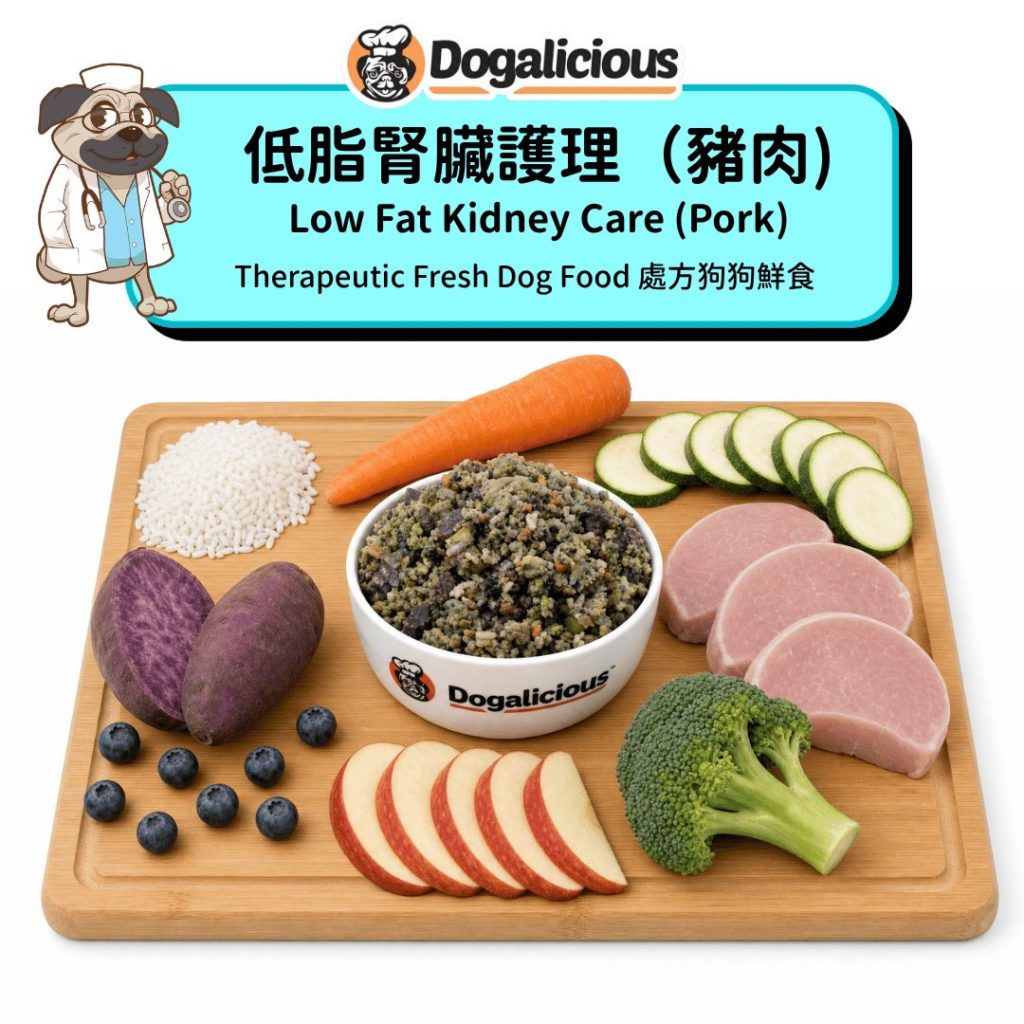
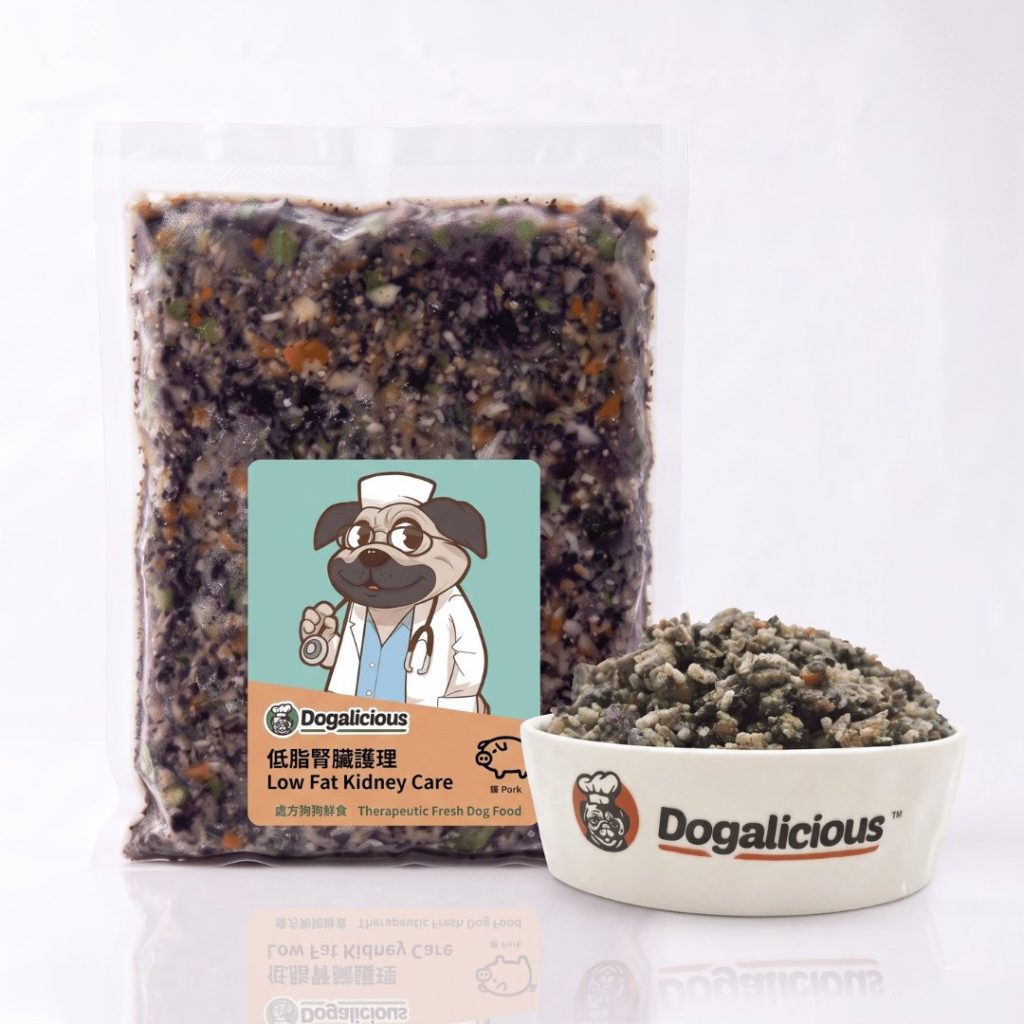
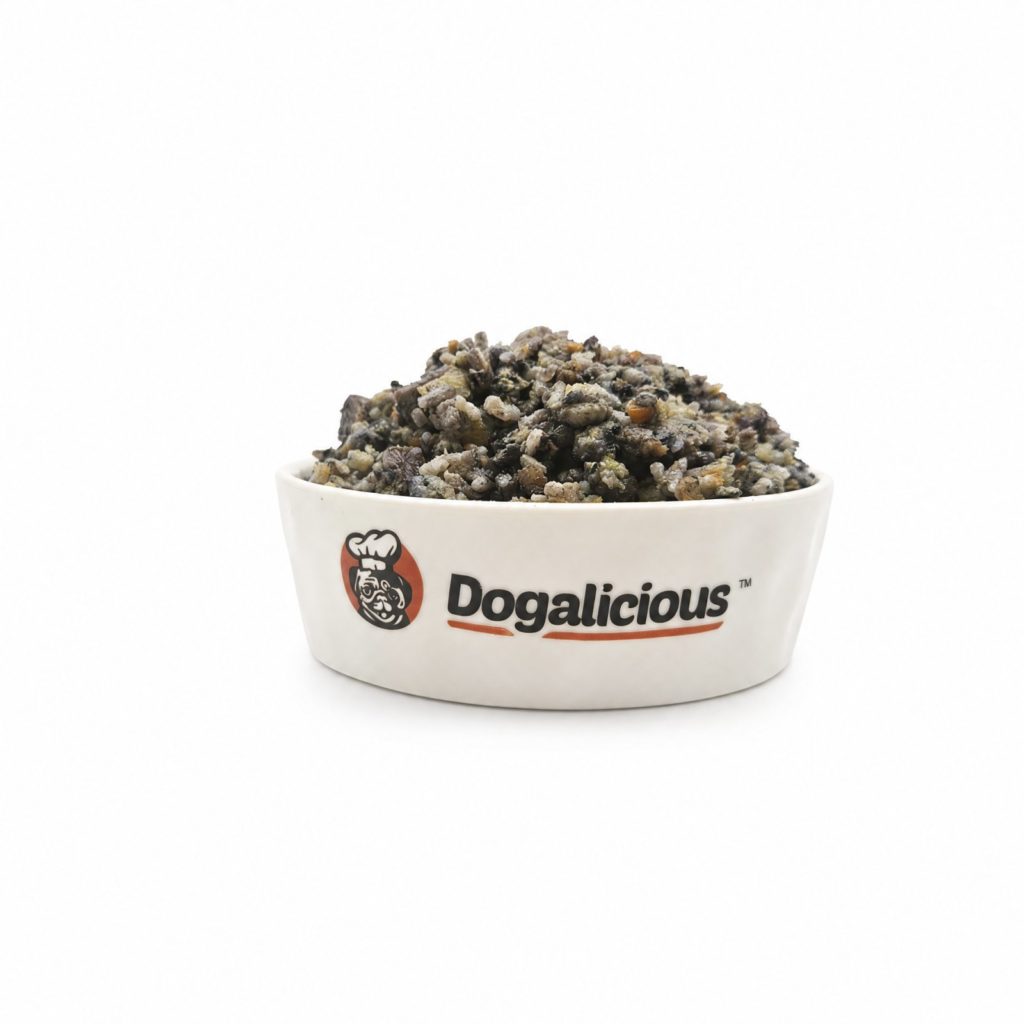
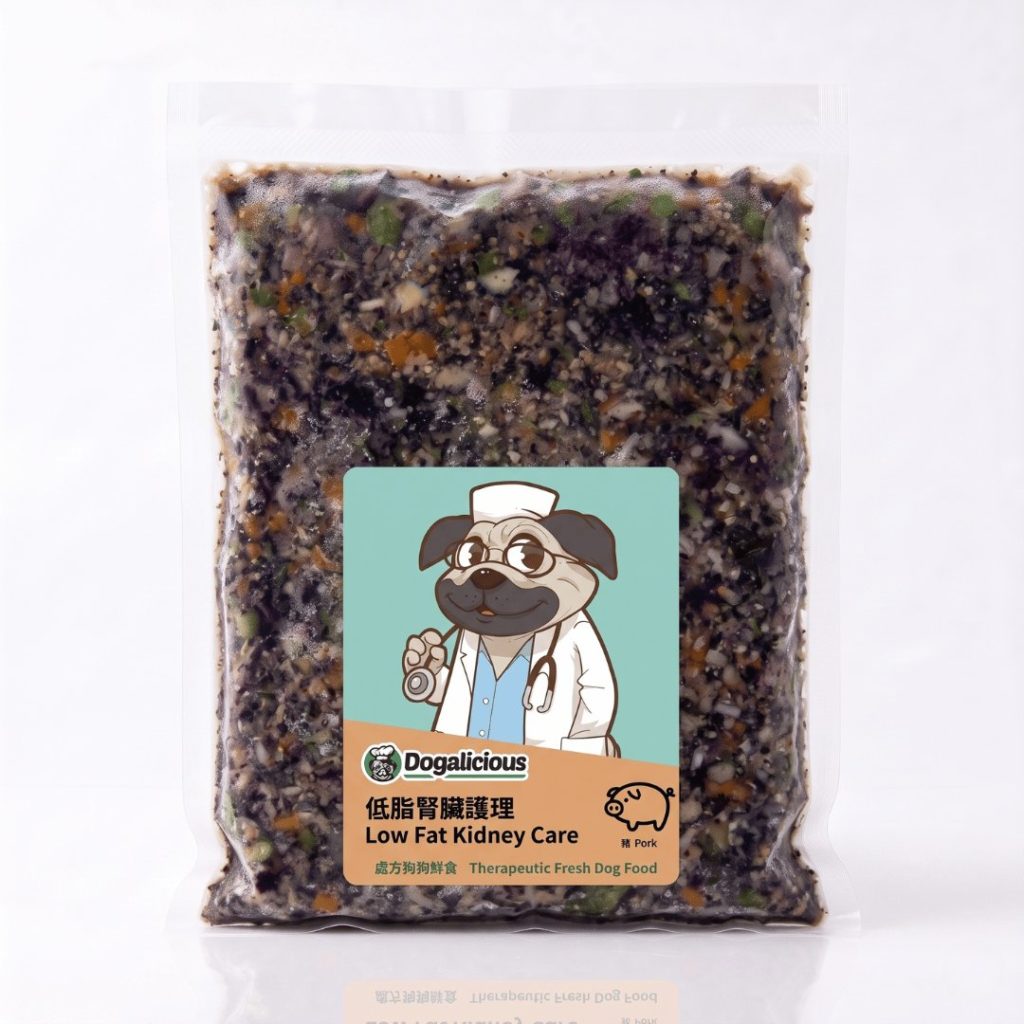
Low Fat Kidney Care (Pork) Therapeutic Fresh Dog Food
Two conditions, one bowl - kidney-friendly and ultra-low-fat. A specialised recipe for dogs managing both kidney disease and pancreatitis (or fat sensitivity). Lean pork tenderloin provides appetising, digestible protein while phosphorus, sodium and fat are all kept low - a rare, genuinely dual-purpose fresh food.
- Kidney-friendly protein - Restricted in quantity, high in quality - from lean pork tenderloin and egg white - to ease the kidneys.
- Low phosphorus - From natural ingredients only, with no phosphate additives.
- Low fat - Roughly half the fat of standard Kidney Care - supports kidney and pancreas together.
- Moderate sodium, maintained potassium - Protects blood pressure while guarding against the low potassium common in CKD.
- Omega-3 retained (EPA & DHA) - Anti-inflammatory support kept in despite the low-fat design, with a near 1:1 omega-6:omega-3 ratio.
- Digestible energy - White rice and sweet potato supply calories in place of fat.
- Lean pork tenderloin - A novel, highly palatable protein, gently cooked fresh.
Earn up to 152 DogaPoints on this order
Cart discount: 10% off under $100 · 14% off $100-399 · 18% off $400-599 · 20% off $600-1,199 · 22% off $1,200-2,399 · 25% off $2,400+. Applied automatically at checkout - subscribers save even more with Auto-Ship.
Full ingredient list
Made with natural ingredients, so appearance and texture may vary slightly from batch to batch. The recipe and nutrition stay the same.
Nutrient profile · per 100g
About this diet
Some dogs are managing two problems at once: chronic kidney disease alongside pancreatitis or a marked sensitivity to dietary fat. These conditions pull a diet in different directions. Kidney disease calls for restricted phosphorus, moderated protein and controlled sodium; pancreatitis calls for genuinely low fat. Most therapeutic diets address one or the other, which leaves owners choosing which condition to treat.
This recipe is built to satisfy both sets of limits at once. Phosphorus and sodium are restricted to protect the kidneys, protein is moderated in quantity while kept high in quality, potassium is maintained to guard against hypokalaemia, and fat is held low throughout - here it runs at roughly half that of the standard Kidney Care recipes, with the calcium:phosphorus ratio kept in balance.
The ingredient choices make that possible. Egg white supplies high-biological-value protein with far less fat and phosphorus than whole egg; lean pork tenderloin gives an appetising, digestible protein without a fatty cut; and a higher share of white rice and sweet potato provides digestible energy in place of the calories fat would normally add. Even with fat kept low, omega-3 EPA and DHA are retained for anti-inflammatory kidney support, with the omega-6:omega-3 ratio held close to 1:1.
Blueberries and vegetables add polyphenol antioxidants and gentle fibre, and the high moisture of fresh food helps keep your dog hydrated, which eases the kidneys' workload. This is a rare, genuinely dual-purpose diet - always start it under your vet's guidance.
FAQ
This is a therapeutic recipe formulated for dogs with kidney disease together with pancreatitis. Nutrient levels are deliberately adjusted for that condition, so it is best started and monitored under veterinary guidance.
It is fed as a daily main diet, but because phosphorus, protein and other nutrients are deliberately restricted for the target condition, it is not formulated to meet AAFCO/FEDIAF adult-maintenance profiles. Feed under veterinary supervision.
Transition gradually over 7–10 days: start with about a quarter new food mixed into the old, then increase the proportion every 2–3 days until fully switched. Go slower for dogs with sensitive digestion.
Use the feeding guide on this page, which is based on your dog’s ideal body weight rather than current weight. Actual needs vary with age, activity and disease stage, so adjust to maintain condition and review with your vet.
It ships frozen. Keep it in the freezer on arrival, move a pack to the fridge the night before feeding, and use within 3 days once thawed.
That is on purpose. This recipe keeps phosphorus very low to protect the kidneys, and because Ca:P is simply calcium divided by phosphorus, a low phosphorus level naturally makes the ratio high - often above 3:1. Calcium stays normal; it is the low phosphorus doing exactly what a renal diet should. Always feed under your vet's guidance.
Our food is made with natural, whole ingredients, so appearance and texture vary slightly between batches - meat, vegetables and fruit change with the season and the harvest. Every batch is made to the same recipe and nutritional standard and passes the same quality checks, so the nutrition your dog receives stays the same.
Full nutritional analysis
Amino acids
| Arginine (g) | 0.28 |
| Phenylalanine (g) | 0.2 |
| Phenylalanine + Tyrosine (g) | 0.36 |
| Isoleucine (g) | 0.21 |
| Histidine (g) | 0.15 |
| Leucine (g) | 0.35 |
| Lysine (g) | 0.33 |
| Methionine (g) | 0.11 |
| Methionine + Cystine (g) | 0.18 |
| Taurine (g) | 0.01 |
| Threonine (g) | 0.2 |
| Tryptophan (g) | 0.05 |
| Valine (g) | 0.25 |
Fatty acids
| Tot Saturated Fas (g) | 0.8 |
| Tot Monounsaturated Fas (g) | 0.95 |
| Tot Polyunsaturated Fas (g) | 1 |
| ALA (g) | 0.05 |
| EPA (g) | 0.17 |
| DHA (g) | 0.18 |
| EPA + DHA (g) | 0.35 |
| Tot Omega-3 (g) | 0.48 |
| Arachidonic acid (g) | 0.04 |
| Linoleic acid (g) | 0.46 |
| Tot Omega-6 (g) | 0.5 |
| Omega-6 : Omega-3 | 1.04 |
Minerals
| Calcium (g) | 0.23 |
| Phosphorus (g) | 0.09 |
| Ca/P ratio | 2.63 |
| Potassium (g) | 0.19 |
| Sodium (g) | 0.03 |
| Magnesium (g) | 0.05 |
| Copper (mg) | 0.37 |
| Iodine (mg) | 0.1 |
| Iron (mg) | 4.46 |
| Manganese (mg) | 0.83 |
| Selenium (mcg) | 10.5 |
| Zinc (mg) | 4.51 |
Vitamins
| Vitamin A (IU) | 5367 |
| Vitamin D (IU) | 31.9 |
| Vitamin E (IU) | 6.1 |
| Vitamin B1 (thiamine) (mg) | 0.26 |
| Vitamin B2 (riboflavin) (mg) | 0.49 |
| Vitamin B3 (niacin) (mg) | 1.65 |
| Vitamin B5 (pantothenic acid) (mg) | 1.44 |
| Vitamin B6 (pyridoxine) (mg) | 0.27 |
| Vitamin B9 (folic acid) (mcg) | 15.1 |
| Vitamin B12 (cyanocobalamin) (mcg) | 3.08 |
| Vitamin J (cholin) (mg) | 114 |
Reviews
There are no reviews yet.